
New
Apr 26, 2026
Landscape Design 101: Basics for a beautiful yard
Landscape Design 101: Basics for a Beautiful Yard
A beautiful yard isn’t just about buying the most expensive plants at the nursery; it’s about composition. Whether you’re working with a small coastal plot in Rockport or a sprawling estate in Manchester, these foundational principles will help you design a space that feels intentional and balanced.
Understand Your Site (The "Audit")
Before you dig, you need to know what you’re working with.
- Sun Patterns: Track the sun for a full day. A "full sun" plant needs 6+ hours of direct light; putting it in a shady corner is a recipe for failure.
- Soil Type: Is your soil sandy (coastal), clay-heavy, or rocky? Testing your soil pH tells you exactly what nutrients you’re missing.
- Wind & Salt: On Cape Ann, coastal wind and salt spray are real factors. Choose "salt-tolerant" species if you’re near the water.
The Rule of Three: Layers
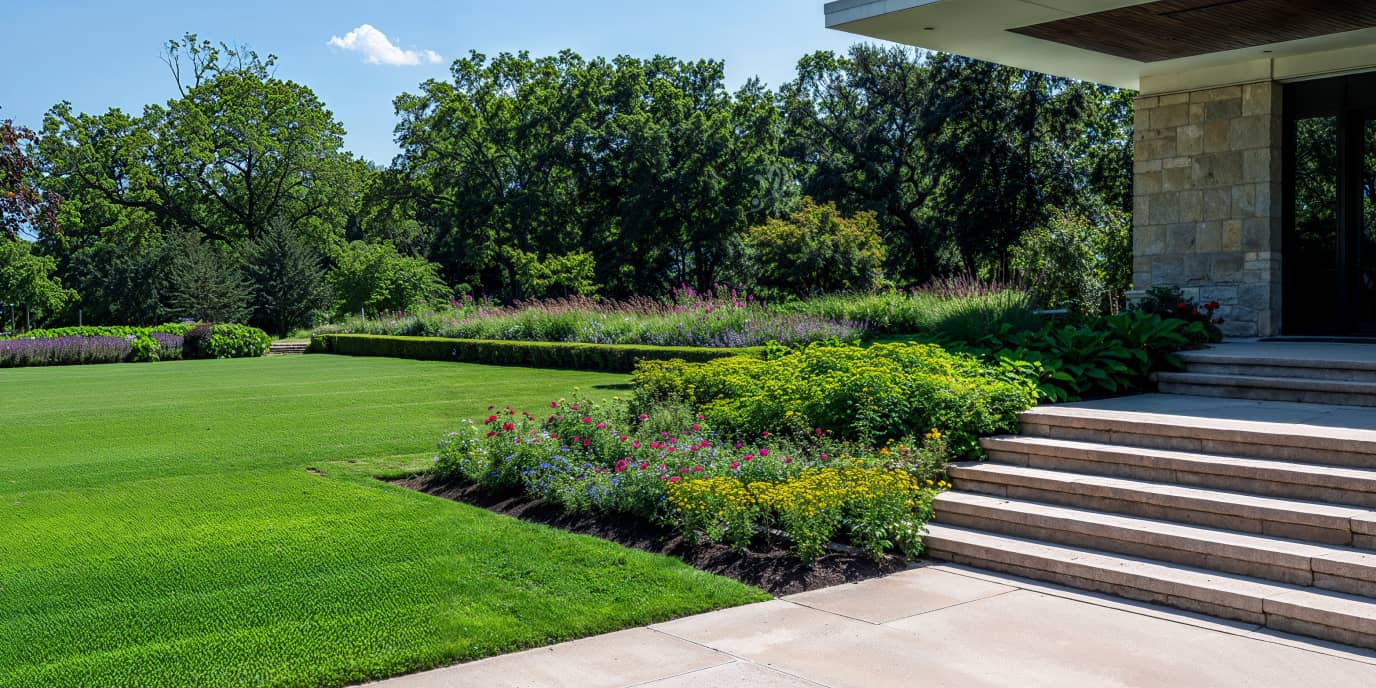
A flat yard looks boring. To create depth, design in three distinct layers:
- The Backdrop (High): Tall trees or large privacy hedges (like Arborvitae or Cedar).
- The Mid-Ground (Medium): Flowering shrubs, ornamental grasses, or perennials (like Hydrangeas or Lilacs).
- The Foreground (Low): Groundcovers, creeping phlox, or short annuals that "spill" over the edges of your beds.
Form Follows Function
Don't just plant for looks—plant for how you live.
- Traffic Flow: Where do people naturally walk? Create wide, clear paths rather than forcing people through a cramped garden.
- Focal Points: Give the eye a place to land. This could be a specimen tree (like a Japanese Maple), a birdbath, or a perfectly pruned hedge.
- Privacy: Use "living walls" (hedges) to block out neighbors or street noise without the harsh look of a wooden fence.
Texture and Color Palette
- Color Schemes: For a high-end, calm look, stick to a monochromatic palette (all whites and greens) or analogous colors (blues, purples, and pinks).
- Texture: Mix fine-textured plants (like ferns or ornamental grasses) with bold-textured plants (like Hostas) to create visual interest even when nothing is in bloom.
The Power of "Clean Edges"
You can have a simple yard, but if the edges are sharp, it will look professional. A deep "V" edge between your lawn and your garden beds provides an instant architectural lift and keeps grass from creeping into your mulch.